Salesforce CRT-450 - Salesforce Certification Preparation for Platform Developer I Certification Examination Exam
Question #11 (Topic: demo questions)
A developer creates a Lightning web component that imports a method within an Apex class. When a
Validate button is pressed, the method runs to execute complex validations.
In this implementation scenario, which two options are.. of the Controller according to the MVC
architecture?
Choose 2 answers
Correct Answer: B, C
Explanation:
In the MVC (Model-View-Controller) pattern used in Lightning Web Components, the controller layer is responsible for handling business logic and communication between the view and the server. In this scenario, the Apex class (B) acts as part of the controller because it contains the server-side logic that performs the complex validations. The JavaScript file (C) also acts as part of the controller because it handles user interactions (such as the Validate button click) and calls the Apex method using wire or imperative Apex. The HTML file (A) represents the view layer, and the XML file (D) is only metadata used for configuration, not part of MVC logic.
Question #12 (Topic: demo questions)
A developer identifies the following triggers on the Expense _c object:
The triggers process before delete, before insert, and before update events respectively.
Which two techniques should the developer implement to ensure trigger best practices are
followed?
Choose 2 answers
Correct Answer: A, C
Explanation:
A . Unify all three triggers in a single trigger on the Expense c object that includes all events:
A . Unify all three triggers in a single trigger on the Expense c object that includes all events:
Salesforce best practices recommend having only one trigger per object to avoid redundancy and
conflicts.
By combining all the events (before delete, before insert, and before update) into a single trigger, the
developer can manage the logic in an organized and maintainable manner.
This also simplifies debugging and ensures that the trigger logic executes in a predictable order.
C . Create helper classes to execute the appropriate logic when a record is saved:
Using helper classes allows for a clean separation of concerns. The trigger becomes a dispatcher that
delegates logic to dedicated classes.
For example, you can create methods like applyDefaultsToExpense(), validateExpenseUpdate(), and
deleteExpense() in a helper class and invoke them from the trigger.
This improves reusability, readability, and testability of the code.
Why not the other options?
B . Unify the before insert and before update triggers and use Flow for the delete action:
While Flow is a powerful tool, it is not ideal for deleting records or replacing Apex trigger
functionality, especially when triggers already exist for other events.
D . Maintain all three triggers on the Expense c object but move the Apex logic out of the trigger
definition:
Maintaining multiple triggers on the same object can lead to conflicts and execution order issues,
even if the logic is moved to helper classes.
Reference:
Trigger Best Practices
Trigger Design Patterns
conflicts.
By combining all the events (before delete, before insert, and before update) into a single trigger, the
developer can manage the logic in an organized and maintainable manner.
This also simplifies debugging and ensures that the trigger logic executes in a predictable order.
C . Create helper classes to execute the appropriate logic when a record is saved:
Using helper classes allows for a clean separation of concerns. The trigger becomes a dispatcher that
delegates logic to dedicated classes.
For example, you can create methods like applyDefaultsToExpense(), validateExpenseUpdate(), and
deleteExpense() in a helper class and invoke them from the trigger.
This improves reusability, readability, and testability of the code.
Why not the other options?
B . Unify the before insert and before update triggers and use Flow for the delete action:
While Flow is a powerful tool, it is not ideal for deleting records or replacing Apex trigger
functionality, especially when triggers already exist for other events.
D . Maintain all three triggers on the Expense c object but move the Apex logic out of the trigger
definition:
Maintaining multiple triggers on the same object can lead to conflicts and execution order issues,
even if the logic is moved to helper classes.
Reference:
Trigger Best Practices
Trigger Design Patterns
Question #13 (Topic: demo questions)
A developer identifies the following triggers on the Expense _c object:A developer identifies the following triggers on the Expense _c object:
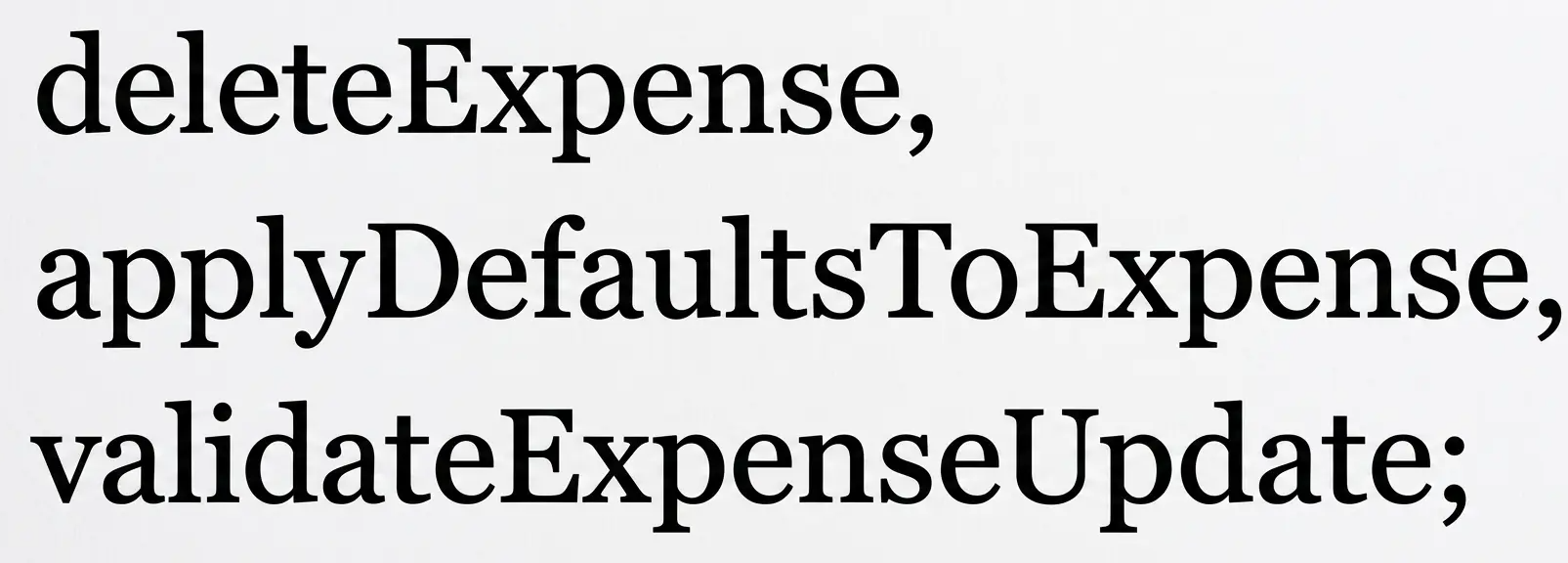
The triggers process before delete, before insert, and before update events respectively.
Which two techniques should the developer implement to ensure trigger best practices are
followed?
Choose 2 answers
Correct Answer: A, C
Explanation:
A . Unify all three triggers in a single trigger on the Expense c object that includes all events:
A . Unify all three triggers in a single trigger on the Expense c object that includes all events:
Salesforce best practices recommend having only one trigger per object to avoid redundancy and
conflicts.
By combining all the events (before delete, before insert, and before update) into a single trigger, the
developer can manage the logic in an organized and maintainable manner.
This also simplifies debugging and ensures that the trigger logic executes in a predictable order.
C . Create helper classes to execute the appropriate logic when a record is saved:
Using helper classes allows for a clean separation of concerns. The trigger becomes a dispatcher that
delegates logic to dedicated classes.
For example, you can create methods like applyDefaultsToExpense(), validateExpenseUpdate(), and
deleteExpense() in a helper class and invoke them from the trigger.
This improves reusability, readability, and testability of the code.
Why not the other options?
B . Unify the before insert and before update triggers and use Flow for the delete action:
While Flow is a powerful tool, it is not ideal for deleting records or replacing Apex trigger
functionality, especially when triggers already exist for other events.
D . Maintain all three triggers on the Expense c object but move the Apex logic out of the trigger
definition:
Maintaining multiple triggers on the same object can lead to conflicts and execution order issues,
even if the logic is moved to helper classes.
Reference:
Trigger Best Practices
Trigger Design Patterns
conflicts.
By combining all the events (before delete, before insert, and before update) into a single trigger, the
developer can manage the logic in an organized and maintainable manner.
This also simplifies debugging and ensures that the trigger logic executes in a predictable order.
C . Create helper classes to execute the appropriate logic when a record is saved:
Using helper classes allows for a clean separation of concerns. The trigger becomes a dispatcher that
delegates logic to dedicated classes.
For example, you can create methods like applyDefaultsToExpense(), validateExpenseUpdate(), and
deleteExpense() in a helper class and invoke them from the trigger.
This improves reusability, readability, and testability of the code.
Why not the other options?
B . Unify the before insert and before update triggers and use Flow for the delete action:
While Flow is a powerful tool, it is not ideal for deleting records or replacing Apex trigger
functionality, especially when triggers already exist for other events.
D . Maintain all three triggers on the Expense c object but move the Apex logic out of the trigger
definition:
Maintaining multiple triggers on the same object can lead to conflicts and execution order issues,
even if the logic is moved to helper classes.
Reference:
Trigger Best Practices
Trigger Design Patterns
Question #14 (Topic: demo questions)
Universal Containers wants to ensure that all new leads created in the system have a valid email
address. They have already created a validation rule to enforce this requirement, but want to add an
additional layer of validation using automation.
What would be the best solution for this requirement?
Correct Answer: B
Explanation:
Explanation: Before-save Apex Trigger: This is the best solution because a before-save trigger
Explanation: Before-save Apex Trigger: This is the best solution because a before-save trigger
runs before the record is saved to the database, providing an opportunity to validate or
modify the data. In this case, the Apex trigger can validate the email address using a regular
expression or a third- party API call to ensure the email address is valid. If the email is invalid,
an error message can be displayed using addError(). Why not the other options? A . Submit a
REST API Callout with a JSON payload: REST callouts are more complex and generally not
recommended for simple validation tasks like email format validation. Additionally, callouts
cannot be performed directly in a before-save trigger. C . Use a custom Lightning Web
Component (LWC): LWCs are primarily for UI interactions and should not be used to enforce
data validations that are server-side requirements. D . Use an Approval Process: Approval
Processes are for managing the approval flow of records, not for real-time validations. They
cannot enforce email validation directly. Reference: Apex Triggers Documentation Trigger
Context Variables
Question #15 (Topic: demo questions)
A company's engineering department is conducting a month-long test on the scalability of an inhouse-developed software that requires a cluster of 100 or more servers. Which of the following
models is the best to use?
Correct Answer: D
Explanation:
Infrastructure as a Service (IaaS) is the best model for the scenario described because it provides ondemand access to compute, storage, and networking resources that are ideal for a scalable server